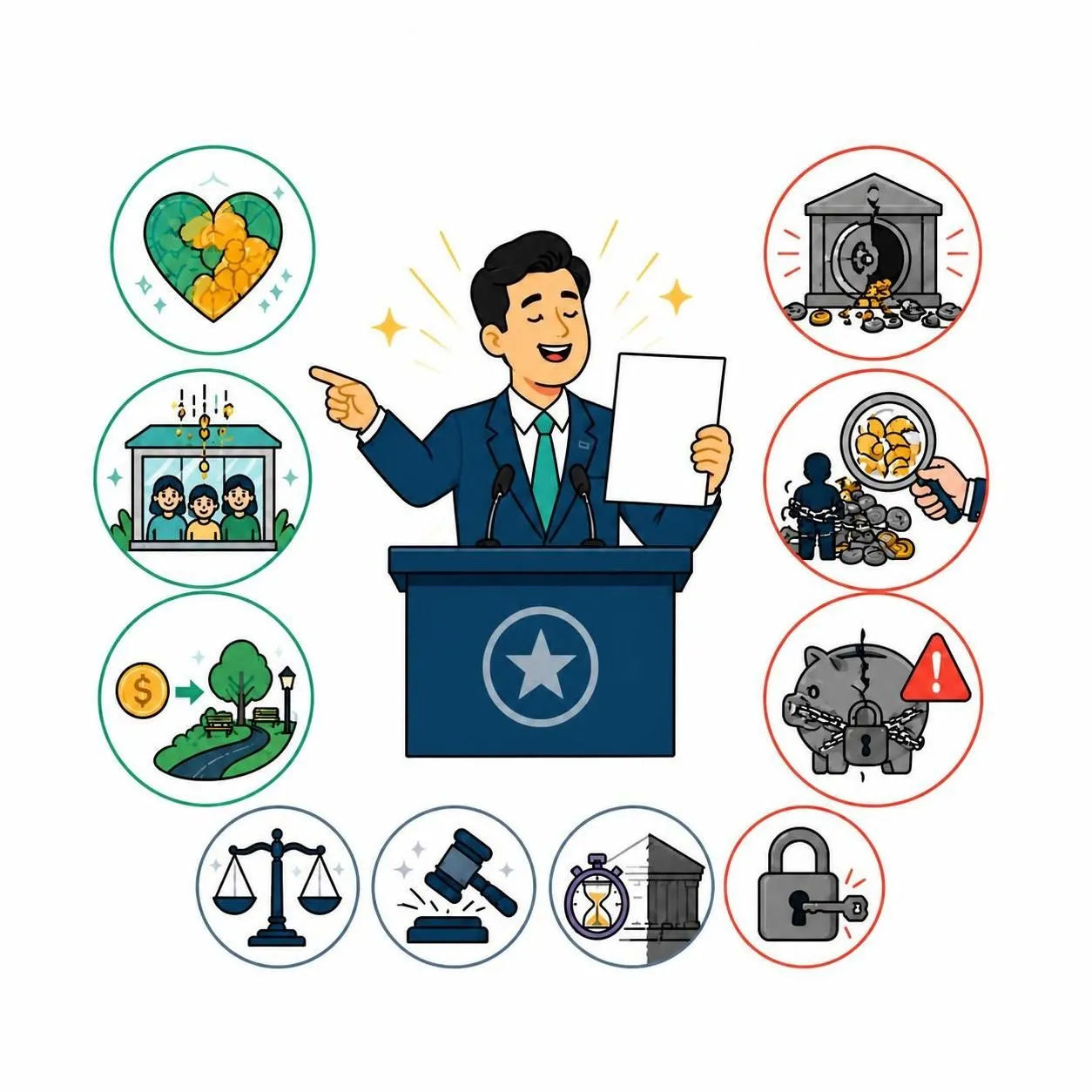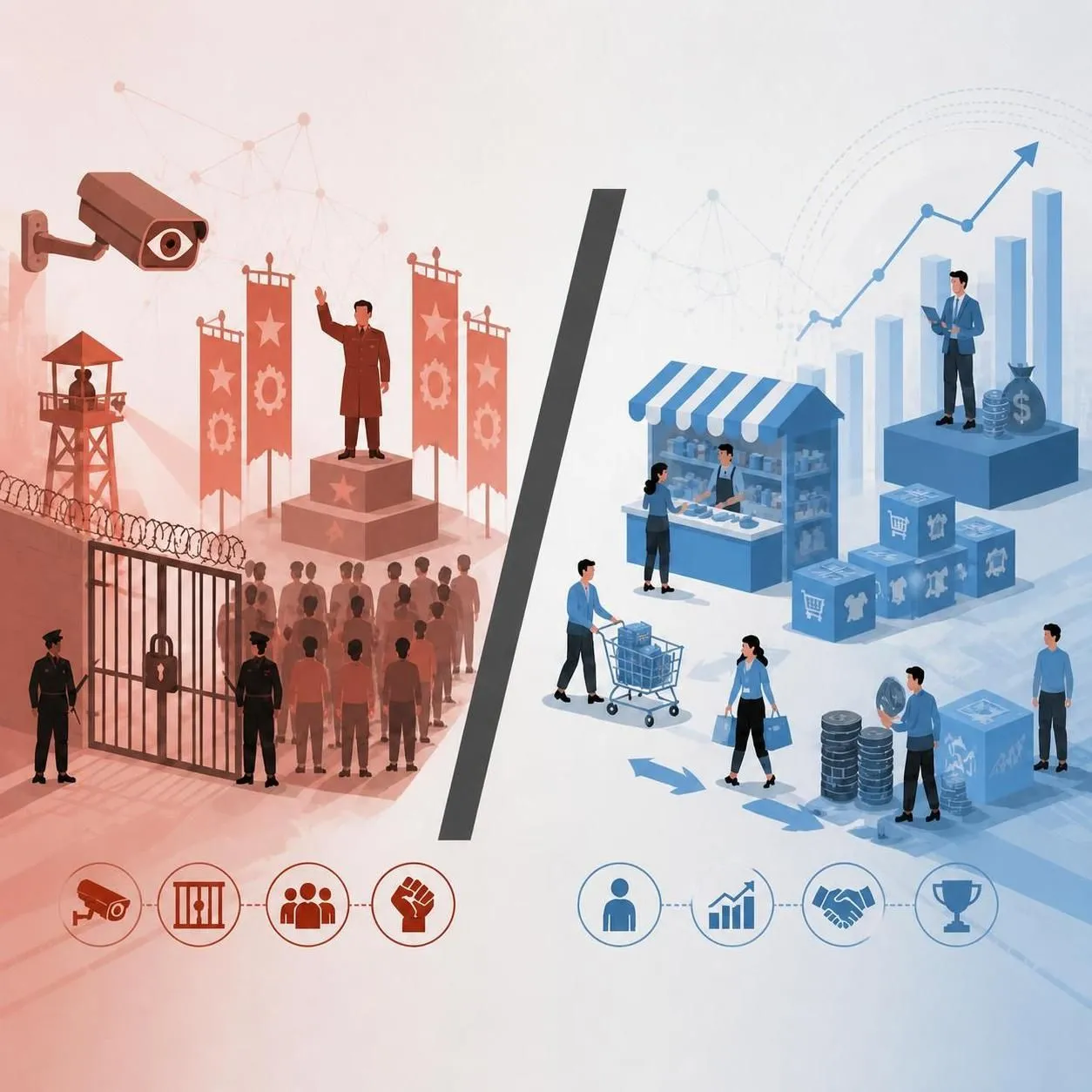
When a political party sits in opposition, they hold tremendous rhetorical power. They can critique every decision, point out every failure, and promise an alternative future without the burden of implementation. The moment they gain power, that freedom evaporates. What follows is often a familiar pattern: the very problems they pledged to solve remain unresolved, new complications emerge, and the party that once campaigned on accountability becomes defensive about its own unmet commitments.
This isn't accidental or isolated—it's a structural feature of modern electoral politics that repeats across democracies worldwide. Understanding why requires examining how campaigns function, what incentives politicians actually face, and how the gap between promise and delivery has become not just common, but normalized.
Why Opposition Promises Rarely Materialize in Government
The Reality Check Upon Taking OfficeWhen opposition parties enter government, they encounter constraints they didn't fully anticipate during campaigning:
- Budgetary realities: The treasury may be in worse shape than publicly known. Inherited debt, pension obligations, and existing commitments consume resources that were promised for new initiatives.
- Bureaucratic inertia: Government machinery doesn't pivot on command. Civil servants, existing regulations, and entrenched systems slow implementation of even popular reforms.
- International obligations: Trade agreements, NATO commitments, EU regulations (in European contexts), or other international frameworks limit policy flexibility in ways opposition parties downplay.
- Economic cycles: A government inheriting an economy at a particular point in its cycle may face recession, inflation, or currency crises that force them to abandon campaign promises in favor of damage control.
- Technical complexity: Problems that seem simple from opposition platforms—healthcare reform, tax overhaul, infrastructure modernization—reveal themselves to be vastly more intricate once you're inside the system attempting solutions.
Opposition parties are rewarded for criticism; governing parties are judged on outcomes. A party out of power succeeds by making the current government look bad. Once in power, they face a different scoreboard. Public trust becomes more valuable than rhetorical purity. When forced to choose between fulfilling a specific campaign promise and maintaining broader economic or political stability, most governments choose stability. Voters rarely reward a party for keeping a promise that created secondary problems.
The Mechanisms That Drive Unfulfilled Promises
The government claimed it faced structural obstacles that prevented it from fully honoring its promises. Budget crises required deeper spending cuts than pledged, environmental standards threatened major industries and jobs, wage increase commitments conflicted with labor market competitiveness, and justice system improvements demanded years of training and infrastructure investment that couldn't be rushed.
The government prioritized other objectives over its ideological commitments, backing away from several key promises. Though it pledged aggressive action against corruption, investigating predecessors consumed political capital needed elsewhere. It promised immigration restrictions but found that enforcement created labor shortages in critical industries. The government also committed to tax increases on the wealthy but abandoned the plan after taking power, as it became politically toxic. Additionally, it delayed promised environmental restrictions following business lobbying efforts.
The government attributed its broken promises to factors beyond its control rather than acknowledging its own role. It blamed predecessors for healthcare system structure that would take years to change, claimed an inherited recession made employment growth targets unrealistic, attributed housing affordability failures to market forces rather than its own policies, and blamed private companies for inflation while simultaneously increasing taxes on those same companies.
How Politicians Court Minority Groups Regardless of Ideological Fit
Vote concentration matters more than ideological consistency in modern politics. A minority group with strong turnout and geographic concentration—whether based on ethnicity, religion, sexual orientation, or socioeconomic status—can swing close elections. This mathematical reality has pushed parties to pursue "coalition of convenience" strategies that would have seemed contradictory a generation ago.
| Strategy | Historical Approach | Modern Adaptation | What Actually Happens |
|---|---|---|---|
| Ethnic/religious appeals | Parties maintained consistent positions on cultural issues for decades | Parties shift positions based on which minority group's votes they're chasing | Winning group receives symbolic gestures; actual policy shifts often don't materialize |
| LGBTQ+ support | Conservative parties largely rejected; progressive parties championed | Conservative parties compete for support with token policy positions | Policies advance slowly; parties revert to prior positions once electoral cycle ends |
| Economic minority policies | Labor unions and business associations had traditional party homes | Both left and right parties bid for support with contradictory economic promises | Economic policies reflect neither group's actual interests but compromises that satisfy neither |
| Immigration positions | Parties maintained consistent stances | Both restrictive and open-border parties shift based on electoral need | Incoherent policy results; enforcement of old rules while promising new ones |
Why This Works (Electorally) and Fails (Governmentally)
During campaigns, parties can make contradictory commitments to different constituencies because:
- Geographic and informational separation: A conservative party can promise LGBTQ+ rights protections to urban progressives while promising traditional values preservation to rural conservatives, confident these groups won't directly compare messaging.
- Symbolic politics suffices during opposition: Vague commitments to "listen to communities," "create inclusive spaces," or "ensure representation" cost nothing and satisfy both the targeted group and the party base who hear it as harmless rhetoric.
- Implementation requires coherence: Once governing, you cannot simultaneously maintain traditional social policies AND advance minority protections, promise open immigration AND restrict benefits or support both conservative religious positions AND comprehensive LGBTQ+ equality.
The minority group that supported the party based on campaign promises discovers either that promises were vague enough to be meaningless, or that competing promises to other groups take priority.
Typical Opposition Economic Promises
| Promise Type | Campaign Message | Economic Reality When Implemented | Long-Term Consequence |
|---|---|---|---|
| Wage increases/worker benefits | "Workers deserve better pay and security" | Funded through higher taxes (unpopular) or deficit spending | Increased government debt without corresponding revenue; inflation pressure |
| Tax cuts | "You deserve to keep more of what you earn" | Reduces government revenue while maintaining or expanding spending | Structural budget deficits; bond markets demand higher interest rates; debt servicing costs crowd out other spending |
| Infrastructure investment | "We'll rebuild our crumbling infrastructure" | Large upfront costs, payoff measured in decades | Debt increases immediately; economic benefits uncertain and delayed; future governments inherit the bill |
| Universal programs (healthcare, childcare, education) | "Everyone deserves access regardless of income" | Requires sustained funding increases of 3-5% annually | Entitlement spending grows faster than tax revenue; governments eventually cut or means-test programs after being elected |
| Pension improvements | "Retirees have been shortchanged" | Locks in spending increases for 30+ years | Unfunded liability mushrooms; future generations pay interest rather than invest in their own needs |
Why Citizens Fail to Hold Parties Accountable
- Weak Accountability Mechanisms Citizens lack unified, organized ways to collectively demand results. Voters dispersed across regions have no formal mechanism to enforce delivery on campaign promises. Unlike businesses with contracts or shareholders with legal recourse, voters can only express dissatisfaction at the ballot box years later. By then, the original promise has been forgotten, and the political moment has passed.
- Politicians claim delivery: Politicians create task forces, hold press conferences, or pass legislation with no funding or enforcement power. Media reports these as victories. Citizens see activity and believe their voice was heard. The politician claims delivery. But conditions haven't changed. The gap between activity and outcomes gets normalized, allowing politicians to claim credit for effort rather than results.
- Comparison to Alternatives: Voters operate within a binary choice. If they believe Party A broke promises but Party B would be worse, they vote Party A again despite dissatisfaction. This "lesser evil" logic removes accountability—a party only needs to be marginally better than its opposition, not actually effective. Fear of the alternative becomes the dominant factor.
- Low Expectations from Time Horizons: Citizens develop low expectations over time. Politicians saying "real change takes time" become credible. But "gradual" often means "never"—the politician gets reelected before results materialize, then the cycle resets.
For Voters: How to Evaluate Campaign Promises Critically
- Read the full policy platform, not just headlines
- Ask: "What specifically will happen?" rather than "What problem will be solved?"
- If promises lack specificity, they're likely designed for flexibility (i.e., non-binding)
- Add up all promised spending increases and tax cuts
- If they don't balance and the government isn't running a current surplus, the math doesn't work.
- Ask: "Will this increase the deficit?" If yes, ask "For how long?" and "What's the exit strategy?"
- Review what the same party promised last election cycle
- Which promises did they keep? Which were quietly abandoned?
- Did they make similar promises in multiple cycles without delivery?
- Map promises to different constituencies: Do they contradict?
- Ask how the party will handle tradeoffs (they won't tell you; that's the point)
- Pay attention to minority groups the party is courting: Do their interests align with the party's base ideology?
- The opposition's promises to "fix" what the current government got wrong often are equally unrealistic
- The opposition will face the same constraints once in power
- The pattern repeats because it's baked into the system, not caused by villains on one side
For Journalists and Media: Questions to Ask Politicians
During campaigns:
- "You promise X outcome. What specific actions will you take?" (Forces specificity)
- "How much will this cost and how will it be funded?" (Exposes math problems)
- "If [external factor] prevents this, what's your backup plan?" (Tests realism)
- "In your last time in office/opposition, you promised [previous promise]. Why did that not happen?" (Creates accountability)
While in power:
- "You promised X in your campaign. What's the status?" (Regular tracking)
- "The timeline was [date]. Why are we now at [later date]?" (Prevents indefinite delays)
- "You blamed [factor]. What have you done about [factor]?" (Tests whether they're addressing causes or making excuses)
- "This minority group supported you based on [promise]. What have you delivered?" (Tracks targeted promises)
This I say in a naive way, because the truth is that many politicians in power either attack journalists and channels who ask tough questions or ignore those questions by giving unrelated answers, like party mantras.
For Voters and Activists: Creating Pressure for Accountability
- Create a public record of campaign promises from video clips, written platforms, and statements
- Don't rely on party interpretations of what was promised; use original sources
- Share this record as governance unfolds
- For each major campaign promise, create a simple tracker: Not Started / In Progress / Completed / Abandoned
- The act of visible tracking creates pressure; politicians prefer quiet abandonment
- At midterm, request town halls or forums where politicians must address unfulfilled promises
- Frame it as "progress report" rather than "gotcha"; politicians are more likely to attend
- Publicize the event and promise attendance to make avoidance costly
- Parties respond to electoral threats more than to moral arguments
- If a politician ignores minority groups that supported them, encourage primary opposition or support for rival party candidates
- This requires coordinated effort but is the primary mechanism that works
Ask Questions
The scale has increased significantly. Historical analysis shows major parties delivered 50-60% of campaign promises; modern estimates suggest 20-40%. The difference is intentional—campaigns are now designed as persuasion tools rather than binding commitments. Politicians know promises made in opposition won't be scrutinized once they govern.
Voters face a choice between a party that broke promises and an opposition party making equally unrealistic new promises. There's no credible alternative. Additionally, media covers broken promises as isolated failures rather than patterns, and politicians successfully blame external factors (courts, inherited crises, bureaucracy).
Rarely, because accountability mechanisms are weak. Minority groups lack unified enforcement power, politicians offer symbolic gestures instead of real change, and the comparison-to-alternatives problem makes voters reluctant to switch parties. Primary challenges or organized vote-switching are the only mechanisms that work.
Structural changes would help: binding campaign platforms, public tracking systems, explicit timelines with consequences, and credible primary challenges. However, the core problem is systemic—opposition thrives on criticism while governance requires compromise. No single reform eliminates this tension.
Vote concentration matters more than coherence. A minority group delivering 10,000 concentrated votes in a swing district changes election outcomes. Parties can make contradictory promises to geographically separated groups because the groups don't directly compare messaging until after the election.
Parties promise both spending increases and tax cuts, creating structural deficits. These seem manageable initially, but compound over years. By year 3-4, governments must choose between reversing course (breaking more promises) or allowing debt to spiral, both politically painful.
Demand specificity over inspiration. Ask politicians "What exactly will happen?" and "How is this funded?" Evaluate track records explicitly. Recognize that opposition promises are as unrealistic as the current government's were. Vote strategically on delivery, not rhetoric, or accept that promises are campaign theater.