You're standing in the supermarket, reaching for a "Blueberry Blast" juice because you want something healthy. The label screams blueberries. The bottle is decorated with plump, juicy berries. You feel good about your choice—antioxidants, vitamins, natural goodness. You get home, drink it, and feel satisfied that you've made a smart decision.
Here's the thing few people will tell you: you probably just paid premium prices for 90% apple juice with a splash of blueberry concentrate for color and flavor. And if you bought that fancy package of "dehydrated superfood fruits," you've lost more vitamins than you realize, even though the package looks so nutrient-dense.
The frustrating part? It's all legal. The packaging doesn't lie—not technically. But it sure as hell misleads you into thinking you're getting something you're not. This isn't accidental. It's calculated marketing designed to exploit what you see on a shelf and what you want to believe about your food.
What's Really in Your "Fruit" Products
Dehydrated Fruits CaseHere's what happens when you dehydrate fruit: roughly 50–80% of vitamin C vanishes. Gone. Heat-sensitive B vitamins take a hit too. When you buy that bag of dried mango or apple slices, a significant chunk of the original vitamin content is already history.
Why? Because vitamin C is fragile. It hates heat, it hates air exposure, and it's water-soluble—meaning it leaches out during the drying process. It's the first casualty of dehydration, and manufacturers know this.
But here's where it gets interesting—and this is where the industry gets sneaky: minerals like potassium, calcium, and magnesium? They stick around. Fiber stays too. So dehydrated fruit does retain real nutritional value, just not the vitamin profile the marketing suggests.
There's another trick: because water is removed, the remaining nutrients get concentrated. So gram-for-gram, dehydrated apricots have more iron and potassium than fresh ones. Sounds great, right? Except you'd never eat 100 grams of dried apricots in one sitting—you'd probably eat 30 grams. A handful of fresh apricots, by contrast, is usually 150–200 grams. Do the math, and suddenly that "concentrated nutrition" becomes irrelevant because portion sizes are tiny. And those tiny portions? They're loaded with natural sugars that feel innocent because they came from a fruit.
The Juice DeceptionYou know how the ingredient list on a food label lists items in order of weight, from most to least? That's your secret weapon—and it's also where manufacturers bury the truth.
A bottle labeled "Berry Juice" could legally contain as little as 10% actual berries. The other 90%? Apple juice, pear concentrate, or grape juice—the cheapest fruits on the market. It's completely legal because technically, berries are in there. The label isn't lying. But the marketing photo showing those gorgeous raspberries front and center? That's the lie. You're not drinking what your brain thinks you're drinking.
This happens constantly. You pick up a "Superfood Berry Blend" juice, imagine yourself consuming antioxidants from exotic fruits, and walk out feeling virtuous. Meanwhile, the ingredient list reads: apple juice concentrate (first), pear juice concentrate (second), water, and then—buried fourth or fifth—actual berry concentrates in amounts so small they're barely measurable.
Here's why companies do this: berries are expensive. Apples are cheap. A liter of apple juice concentrate costs a fraction of blueberry concentrate. So manufacturers use apples or pears as the base—the majority of the product—and add just enough berry to justify the premium price and justify using berry images on the packaging. They're maximizing profit by minimizing actual berry content while maximizing your perception that you're buying something premium.
Common Deceptive Marketing Techniques on Fruit Products
- "Made with Real Fruit" claims: This can mean as little as 1% real fruit. There's no legal minimum threshold in many countries for this vague language.
- Misleading health halos: Terms like "natural," "wholesome," and "superfood" aren't legally defined. A product with added sugar can still carry a "natural" label if the base fruit is natural.
- Concentrate and sweetener substitution: A "fruit juice" might contain 30% juice concentrate and 70% added sugars or sweeteners, all under the juice category.
- "No added sugar" on naturally high-sugar products: Dried fruit is inherently high in sugar. Labeling it "no added sugar" is technically accurate but misleading about total sugar content.
- Color and appearance enhancement: Many commercial dehydrated fruit products contain added colors (like caramel coloring) or oils to maintain visual appeal—details often buried in small print.
How to Read Labels
- The first three ingredients account for the majority of the product. If apple or pear concentrate appears before the fruit you're paying premium prices for, you know the truth.
- Some jurisdictions require "juice from concentrate" percentages. The EU, for example, requires juice content percentages on certain products. If you see "20% juice," you're drinking mostly water and sweeteners.
- For dehydrated fruits: Compare the calorie and sugar content per 100g to fresh fruit. Dehydrated versions will be 3–4 times denser in calories and sugars per weight, which is normal but important to recognize.
- For juices: Check the sugar content. A glass of "100% juice" might contain 20–25g of sugar—comparable to a soda. The fiber and whole-fruit nutrients are absent.
- Check if the vitamin content listed comes from the fruit itself or is added afterward. Look for phrases like "fortified with" or "added vitamin C." While fortified products aren't harmful, they're not nutritionally equivalent to the original fruit.
- "Naturally flavored" = likely contains minimal actual fruit; may include artificial flavor compounds derived from natural sources.
- "Real fruit juice" = can be 1% juice and 99% sugar water.
- "No artificial colors" = doesn't mean no colors; just that added colors are natural (like fruit extract or beet juice), which can still mislead about true fruit content.
Why Raw Fruit Is Nutritionally Superior
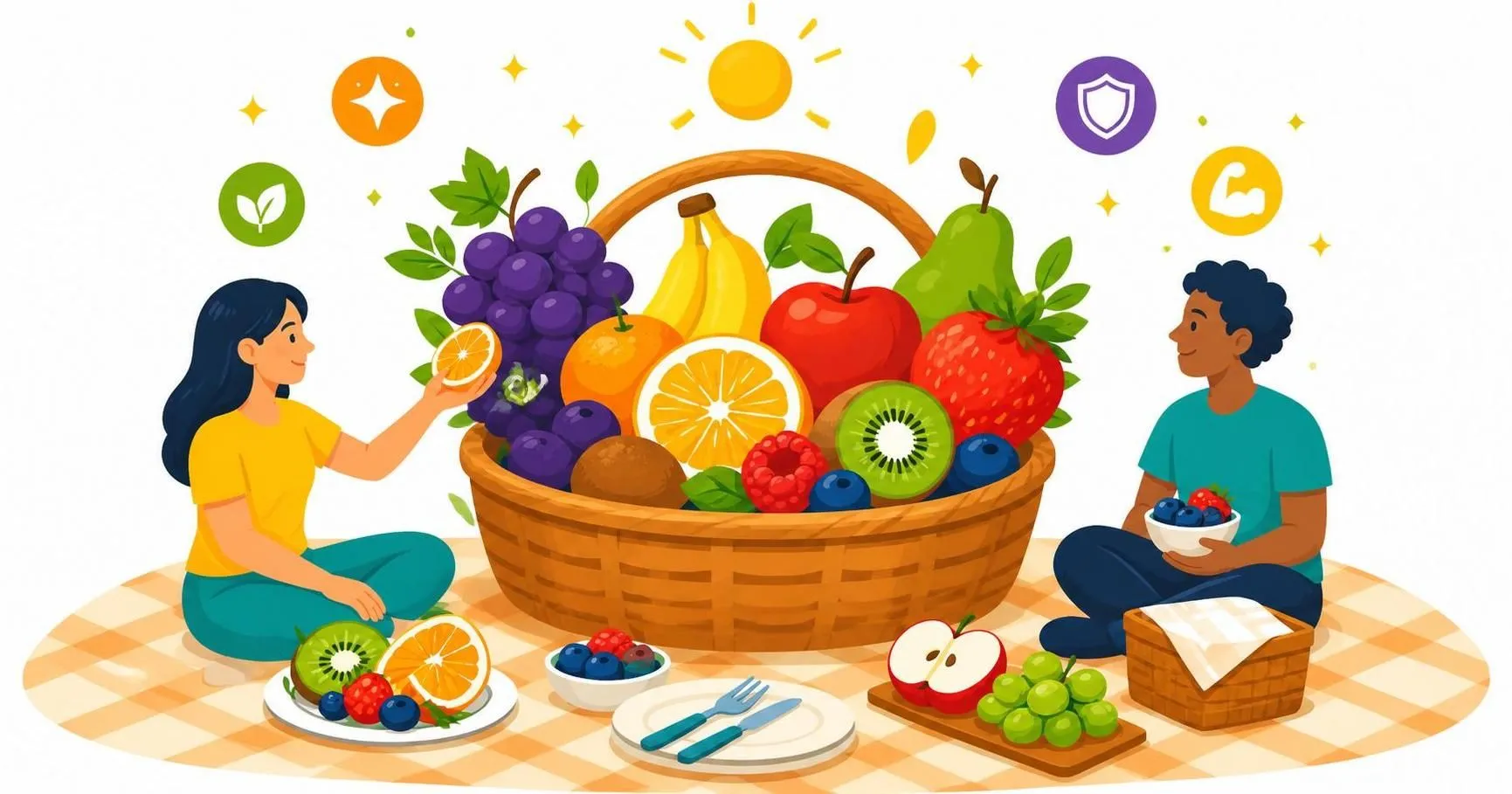
When you bite into a raw apple, orange, or handful of berries, you're getting something processed fruit can never deliver: the complete, unmodified nutrient package nature created. Here's what you actually get:
- All the vitamin C: Raw fruit retains 100% of its vitamin C content until you cut or cook it. Compare this to the 50–80% loss in dehydrated fruit or the complete absence in most juices (which lose vitamin C to oxidation and heat during processing).
- Fiber intact: Fresh fruit has soluble and insoluble fiber that slows down sugar absorption, keeps you fuller longer, and supports digestive health. Juice strips this away entirely. Dehydrated fruit retains some fiber, but the tiny portions mean you consume less overall.
- Whole nutrient profiles Fruits contain thousands of phytochemicals, polyphenols, and antioxidants that work together synergistically. When manufacturers extract juice or dehydrate fruit, they isolate certain components and lose the beneficial interactions between nutrients.
- Natural water content: Fresh fruit's high water content means you consume more volume for fewer calories, which naturally regulates portion sizes. A medium apple (182g) has about 95 calories. A typical serving of dried apple slices (30g) has about 90 calories—but you'll finish them in seconds and still feel like you need more.
- No added anything: No fortification masking nutrient loss, no added sugars, no concentrates, no artificial colors. What you see is what you get.
Practical Tips for Eating More Raw Fruit
- Don't buy fruit with the best intentions—buy fruit based on how long you'll actually keep it. If you buy berries three times a week, buy berries every three days.
- If you buy apples, oranges, or pears—fruits with longer shelf lives—you can buy them once a week or every two weeks. The worst thing you can do is buy a pile of delicate berries on Monday and watch them rot by Wednesday.
- Gather your reference images and sketches. Recommended resolution is 2000-4000 pixels on the longest side. Ensure clear line work and defined composition for optimal AI processing results.
- Raw fruit is nutritionally complete on its own, but combining it with protein or fat makes it more satisfying and prevents blood sugar spikes. Eat an apple with a handful of almonds.
- Have berries with yogurt. Slice an orange and add it to a salad. Pair a banana with peanut butter. This strategy keeps you fuller longer and makes the fruit experience more substantial.
- Seasonal fruits are cheaper, fresher, and taste better. In summer, buy berries, stone fruits, and melons. In fall, buy apples and pears. In winter, buy citrus fruits and kiwis. In spring, buy whatever looks good locally. This isn't just about nutrition—it's about actually enjoying what you're eating.
- Fresh fruit costs more per ounce than processed alternatives, but this ignores an important fact: you eat more dehydrated fruit and juice because they don't satisfy you the way whole fruit does. A 250ml bottle of juice costs less than 200g of grapes, but the grapes will keep you fuller longer and give you better nutrition. When you factor in satisfaction and nutrient density, whole fruit is often more economical.
Ask Questions
No. Fresh fruit retains more vitamins, especially vitamin C, and has more fiber density relative to calories. Dehydrated fruit is more calorie-dense due to water removal, making it easy to overconsume. Use dehydrated fruit as a convenient snack or ingredient, not a replacement for fresh fruit.
It's better than juice drinks with added sugars, but it's still a processed product without the fiber of whole fruit. A glass of orange juice has the same amount of sugar as a soda—about 20–25g—but comes with some vitamins. Eating the whole orange is nutritionally superior.
It depends on the brand and product, but legally, as little as 1%. Always check the ingredient list. If berries appear past the third ingredient, they're a minor component. Better option: look for products specifying "25% berry juice" or similar percentages.
Cost and shelf stability. Apple and pear concentrate are inexpensive, blend well with other juices, and have a long shelf life. Blueberries and blackberries are expensive and more fragile. Companies maximize profit margins by using cheap fruits as the base and adding expensive ones for marketing appeal.
"Juice" (in most countries) contains only juice, while "juice drink" can be 10–99% juice mixed with water, sugars, and other ingredients. The label should specify, but marketing often obscures this distinction with similar packaging.